Home is Where Health Begins
April 6 to April 12 marked National Public Health Week and at Housing Up, we are highlighting the vital role housing plays in health. We recognize that access to safe, stable and affordable housing is a major determinant of health and that we cannot address one without the other. That’s why over the last three years, we have partnered with George Washington University’s Urban Health Program (UHP) to offer public health workshops to the families we serve. In 2025, UHP students hosted 22 workshops covering a wide range of topics, including nutrition, mental health, and body systems. Public health programs, like UHP, are instrumental to dismantling barriers and advancing health equity. Now more than ever, we need these programs as major changes to local and federal policies are putting affordable healthcare further out of reach for the low-income and formerly homeless families we serve.
The Rising Cost of Care in 2026
At the end of 2025, Republican and Democratic lawmakers were gridlocked over renewing the Affordable Care Act (ACA) tax credits, which had made health insurance more affordable for millions of Americans since the COVID-19 pandemic. This dispute led to the longest government shutdown in history and ultimately ended after President Trump threatened to withhold funding from the Supplemental Nutrition Assistance Program (SNAP) – an essential food resource for low-income families and children – allowing the elimination of the ACA tax credits to proceed. Experts predict that this decision will harm some of the lowest-income people by more than doubling Medicaid premiums for enrollees. At a time when Americans already experience catastrophic healthcare expenses at rates twice as high as those in all other developed nations, the expiration of the ACA tax credits will place an even greater burden on those already struggling to make ends meet.
For low-income residents in DC, major changes in DC’s Medicaid eligibility requirements will further exacerbate healthcare costs. In response to an unexpected $1.1 billion budget shortfall, the DC Council approved a bill that made 16,000 residents ineligible for Medicaid in 2026. On January 1, 2026, 14,490 of these residents were moved to a new program called Healthy DC, which provides federally funded health insurance with no out-of-pocket costs, but does not cover dental or vision. Approximately 1,600 residents, however, were removed from Medicaid and do not qualify for Healthy DC due to stricter income limits. While Medicaid eligibility extends to people living 215% of the federal poverty level, the Healthy DC program has a lower income limit of 138% of the poverty level. As a result, these Washingtonians will have to pay higher ACA premiums, and roughly 1,000 individuals will lose premium assistance altogether. Whether families are moved to the Healthy DC plan, forced to pay higher ACA premiums, or left without support, these policy changes will force many to choose between healthcare and other basic necessities.
The Power of Affordable Housing
The US Department of Health and Human Services identifies housing as one of the key social determinants of health, or the nonmedical factors that shape health and well-being. Research shows that unhoused people face significantly poorer health outcomes, with a mortality rate 3.5 times higher than their housed counterparts. People experiencing homelessness are also more likely to live with a disability or chronic illness. According to 2025 data, 16 percent of unhoused adults in DC were living with a physical disability, and nearly 18 percent had a chronic health condition. Disability and homelessness are closely intertwined: a disability can limit employment opportunities and increase the risk of homelessness, while experiencing homelessness can worsen or precipitate disability. For families living paycheck to paycheck, a single unexpected medical expense could trigger housing instability and push them into homelessness.
At Housing Up, we understand that housing is the foundation for health and well-being. In addition to developing and providing affordable housing for families, we provide permanent supportive housing (PSH) using the Housing First model. This approach prioritizes quickly moving families into permanent housing and then providing support services to help them meet their goals and needs. The PSH program is designed to serve chronically homeless families who live with physical or mental health conditions. Once families are safely housed, case managers provide ongoing support to help each family member achieve their goals. Central to this work is the health and well-being of our families: case managers connect families to critical resources, from affordable mental health providers to childcare options.
In 2024, we interviewed Ms. Hall, a PSH client living in our Entwine senior community, about her experience with homelessness and health: “It means everything to me because, like I said, being out there [on the street] and having these health problems, that’s not good. And I’m here, so whenever I don’t feel well, I can just lay down, I can sit back and take care of myself and don’t have to worry about anything.” Ms. Hall’s story shows the powerful impact affordable and stable housing can have on health. While housing alone cannot fully resolve the systemic issues of a healthcare system often driven by profit rather than people, it provides the stability and foundation families need to transform their lives. Partnerships with public health programs, such as UHP, play an essential role in addressing the gaps and barriers many low-income families face. During National Public Health Week, George Washington University’s Public Health Student Association hosted a hygiene drive in which volunteers assembled hygiene kits for seniors living at Entwine.
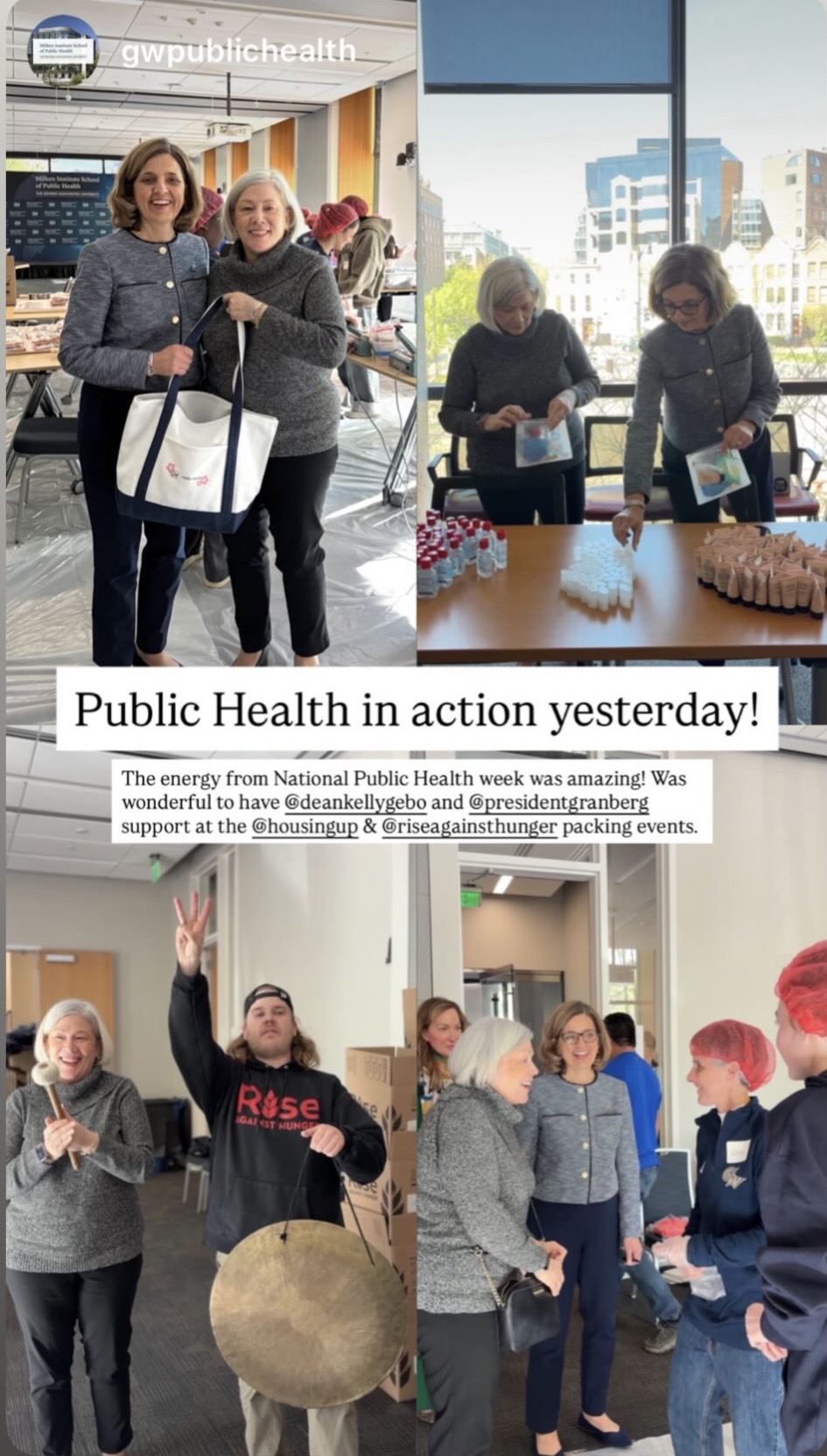
George Washington University Public Health Student Association’s Hygiene Drive for Entwine Residents
As we reflect on the critical link between housing and health, National Volunteer Month offers the perfect opportunity to turn that awareness into action. This April, join Housing Up’s dedicated team of volunteers, our Front Porch Crew. Visit our volunteer page and email Communications & Engagement Assistant, Julia Bliss, at jbliss@housingup.org to start your volunteer journey today.